Movement Manufacturing
Nope, not the stork. Watches, like most mechanical things, are usually manufactured in a factory. Similar to vehicles and computers, a watch movement is a collection of many different small parts that are made separately, in different places, at different times. These little parts then find their way to one location, where they are assembled together to form the item that can either vroom vroom, click and beep, or tick and tock.
The fully assembled item is therefore the perfect integration of all the parts. On their own, the parts are functionless, but together they create a machine with a purpose. A watch’s function is keeping time so you and I will not be late for our 6 pm debate with the local aristocracy (my neighbour Jon, actually, and we mostly meet to dream about retirement).
Ok, so now that that’s been said, let’s discuss the different ways in which the aforementioned parts are made, where they are made, and how they are assembled for use. This is one of the main differences between movements. Ok, they are not similar either, as their designs differ from one to the other, but that assembly process is the crucial bit you want to understand if you want to know what movement you are working on, want to work on, want to own, and, not surprisingly, need to check if it is counterfeit or fake.
Ok, so most of us know that Apple assembles and sells computers, same with Lenovo and Dell. So who makes movements?
Not many watch companies can do this themselves because you need a lot of infrastructure and money to manufacture the parts and assemble them. If they tried, they would probably make some rubbish movements that would not impress many people. Therefore, just like Aston Martin buys engines from Mercedes to use in their cars, many watchmakers buy movements from companies that have the infrastructure and resources to support high-quality production.
When companies like Rolex design and make their own movements, this is called in-house movements. These are usually expensive and carry a bit of prestige because the brand prefers to do everything themselves. The implication is that everything else would be inferior to their standards. They are not saying it straight out… but they kind of are, aren’t they?
When a company buys a movement from a reputable manufacturer, it is called a third-party movement. So, if you want to produce your own watch brand, all you really need to do is have someone manufacture your watch case and design, then buy a batch of movements from a third-party supplier and place them inside. Instant watch brand.
So, what companies design and sell these third-party movements for others to use?
The most famous one is called ETA. It is currently the benchmark of third-party movements and produces several high-quality movements at different levels of complexity and price points. Other well-known companies that do the same thing include Sellita (also Swiss), Miyota and Seiko (Japanese), and Seagull (Chinese). These are, of course, only mechanical movement manufacturers.
Each of the big third-party manufacturers also sometimes uses their own movements in their own watches. If this happens, those movements are still considered in-house for that brand, even if they are usually sold to other companies.
Now let’s look at the different movements that each of the big companies make. I am only going to list them and write a short description after each for easy reference, especially if you want to quickly check what you have on your bench, or in your own watch for that matter.
From there, I am sure all of us can do a quick Google search using the calibre number. So, what is a calibre number?
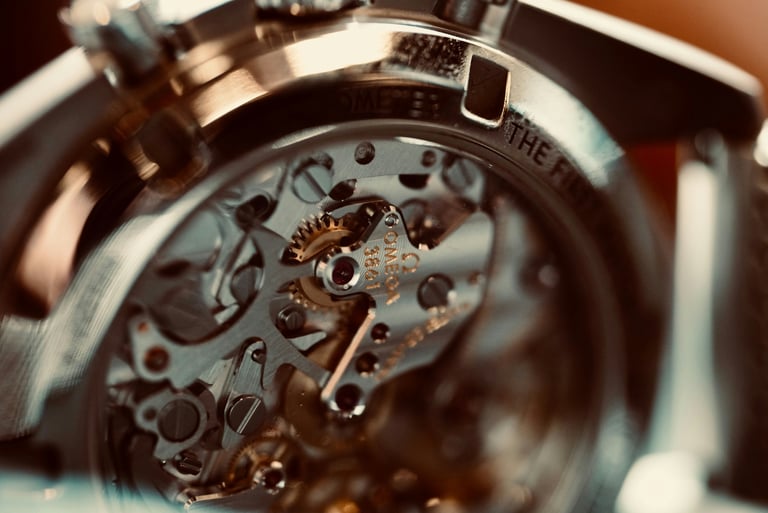
These are the reference numbers usually engraved on the movement itself, and the number tells you which movement, from which company, you are looking at.
Third Party Movements
ETA
2824-2 – Probably the most common automatic. Very reliable.
2892-A2 – Thinner, which means higher grade. Typically used in more expensive watches.
7750 – This is a chronograph. Its kind of thick but also very reliable.
6497 / 6498 – large hand-wind (pocket watch style). This one is also rather good for practicing your watchmaking.
Sellita
SW200-1 – This is the ETA 2824 alternative. It has the same characteristics.
SW300 – Equivalent to the ETA 2892. Just a step up from the 200.
SW500 – Also a chronograph and is said to be based on the ETA 7750.
SW215 – A manual wind movement for those purists among you.
Miyota (Citizen)
8215 – Another entry-level automatic. Some say that the rotor is a bit noisy, Its not broken parts inside its the rotor swinging.
9015 – Higher beat rate so it sweeps more smoothly, its also thinner than the 8215.
9039 – Simple, its the same as the 9015 but without a date.
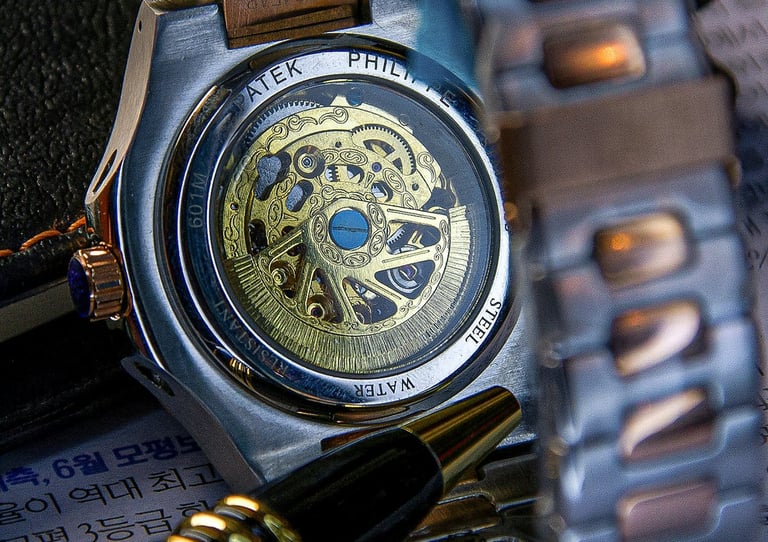
8N24 – Skeleton style movement. Kind of sick design. looks like a Swiss cheese movement but its not Swiss...
Seiko (third-party / NH series)
NH35 – automatic with date, very common in microbrands.
NH36 – Day-date version. I actually own one from "Island Watch".
NH38 – No date.
NH70 – skeleton variant. Same Swiss cheese look.
Cool, so now that you know the different places that movements come from, and how companies manufacture, buy, and sell to each other to produce their watches at the highest quality while staying within their price range, you can start thinking about these things next time you work on something on your bench.
I know I certainly will.
Till next time..
In-house movements
Rolex
Calibre 3135 – Old faithful. Long-time workhorse for the company (Submariner, Datejust).
Calibre 3235 – Newer generation with improved power reserve. So it stays wound for longer when not on the wrist.
Calibre 4130 – Their own in-house chronograph (Daytona).
Omega
Calibre 2500 – An early Co-Axial automatic (based on ETA but modified to their preference).
Calibre 8500 / 8900 – Two fully in-house designed Co-Axial movements, very reliable.
Calibre 8800 – Master Chronometer, anti-magnetic, used in divers.
Calibre 3861 – Modern Speedmaster (Manual wind, Moonwatch).
Patek Philippe
Calibre 324 S C – Their automatic entry level movement.
Calibre CH 29-535 – Their manual chronograph.
Calibre 240 – A very thin automatic with a micro-rotor.
Audemars Piguet
Calibre 3120 – Their original Royal Oak movement.
Calibre 4302 – A newer automatic version.
Calibre 4401 – This one has an integrated chronograph.
Jaeger-LeCoultre
Calibre 899 – Rather slim automatic.
Calibre 965 – Reverso manual wind. People go ga-ga for this one. Not my thing though.
Calibre 751 – Another day another chronograph.
Seiko (in-house, so they use these for their own products and don't sell them for others to use...I think)
6R35 – Their mid-range automatic.
8L35 – A higher-end version, used in the Prospex line.
9S65 – For the Grand Seiko automatic.
A. Lange & Söhne
L121.1 – Lange base movement.
L951.1 – Datograph chronograph. Marketing really, It just means it has a big date display along with the regular chronograph function.
L093.1 – Saxonia thin. Yeh, its thin, what else can I say.
Vacheron Constantin (Three to note, nice and simple)
Calibre 2450 – Automatic.
Calibre 4400 – Manual wind.
Calibre 5200 – Chronograph.